


Public welfare hotline:+86-010-84404273
Email: apepcy@apepcy.org
 Mombasa-Nairobi Railway
Six hundred years ago, Zheng He's fleet sailed across the Western Pacific and Indian Oceans, reaching the coast of East Africa. Historical records show that Zheng He visited the Mombasa area of Kenya on multiple occasions. The large quantities of Ming dynasty porcelain unearthed in Lamu, Malindi, Mombasa and other locations stand as silent testament to the long history of maritime exchanges between China and East Africa.
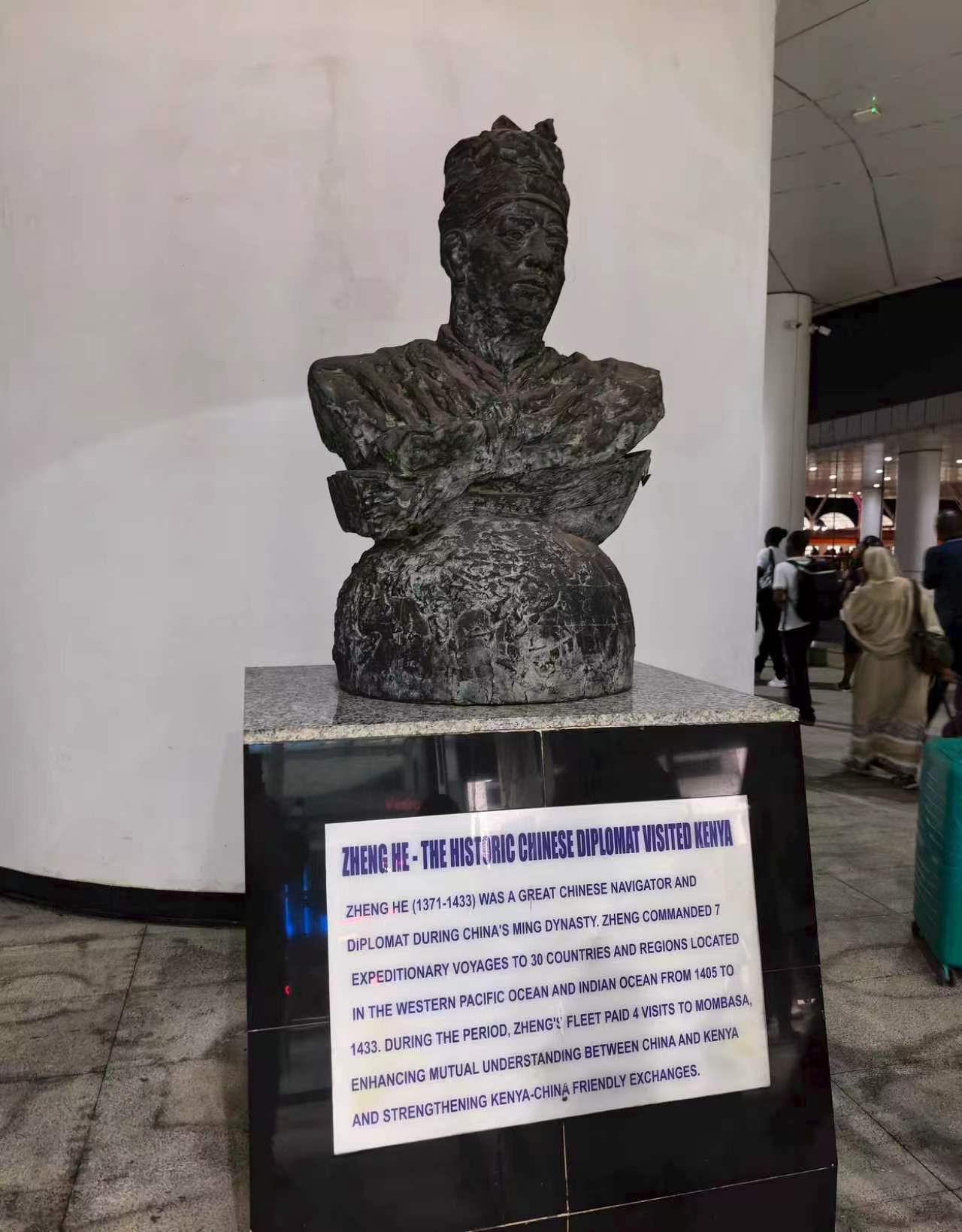
A statue of Zheng He at Mombasa Station
Six hundred years later, a modern railway jointly built by China and Kenya now connects Mombasa on the Indian Ocean coast with Nairobi, the Kenyan capital. The Mombasa-Nairobi Railway is more than an infrastructure project. It is a bond carrying friendship, development and the promise of the future. It has brought ports closer to the hinterland, cities closer to rural areas, and the peoples of China and Africa closer to each other.
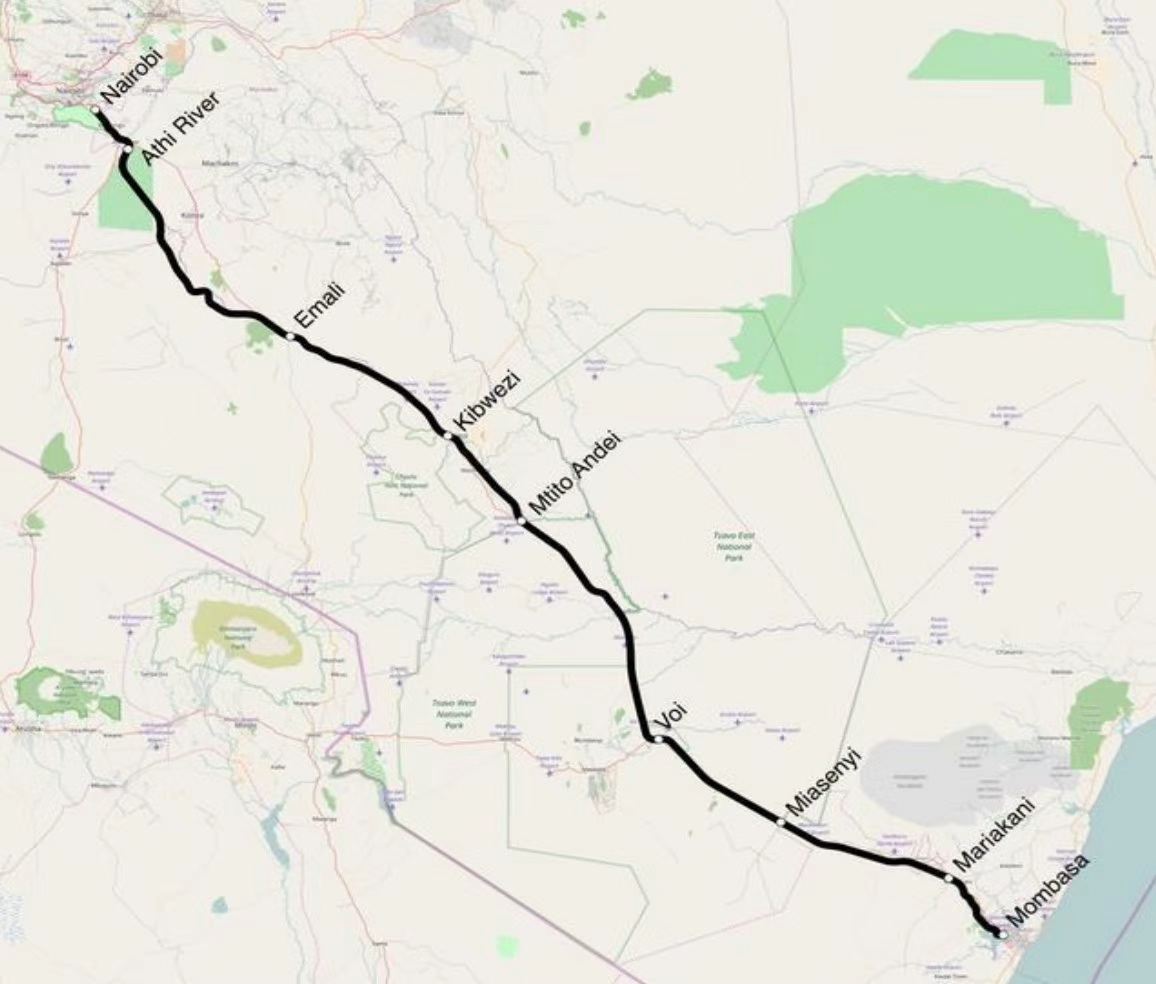
Mombasa-Nairobi Railway route
On January 8, 2026, President Xi Jinping sent a congratulatory message to the opening ceremony of the "China-Africa Year of People-to-People Exchanges". On the same day, Foreign Minister Wang Yi attended the opening ceremony at the African Union headquarters in Ethiopia and released a list of projects. The "Changier Silk Road: Soft Connectivity": China-Africa Youth Humanistic Care Action along the Mombasa-Nairobi Railway, submitted by Beijing Changier Education Foundation, was selected for the Youth Vanguard section of the "China-Africa Year of People-to-People Exchanges" featured activities list, making it the only featured project from Beijing to be included.
This is both an honor and a responsibility.
Having previously launched the pilot activities of the "China-Africa Youth Humanistic Care Action along the Mombasa-Nairobi Railway" project in Eldoret, a highland city in Kenya, using an urban marathon as the entry point, Beijing Changier Education Foundation has continued to extend the project along the Mombasa-Nairobi Railway corridor, moving from the highlands to the coast, from sports-based public welfare to community care, and from youth exchanges to women's empowerment, educational support, and sustainable development practices.
If the first story was about “running,” with young Kenyans striding toward the world, then this story is about “arriving.” Along the Mombasa-Nairobi Railway, Changier reaches deep into communities, schools, beaches, and crowds, gradually transforming the “hard connectivity” of infrastructure into the “soft connectivity” of cultural and people-to-people exchange, and ultimately into the “heart-to-heart connectivity” of mutual understanding and goodwill.
From the Highlands to the Coast: A Shared Future Along One Railway
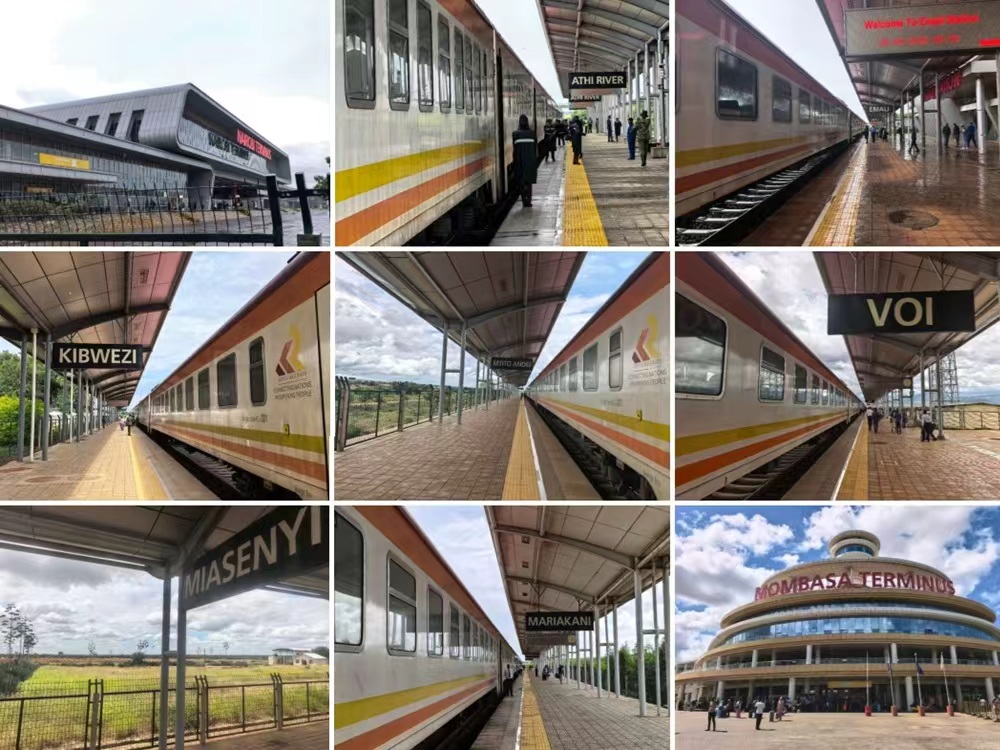 Nine stations along the Mombasa-Nairobi
Railway
Nine stations along the Mombasa-Nairobi
Railway
The Mombasa-Nairobi Railway is a flagship project of China-Kenya cooperation and a landmark initiative of the Belt and Road in Africa.
In August 2009, the Kenyan government and China Road and Bridge Corporation signed a memorandum of understanding and cooperation on the Mombasa-Nairobi Railway project. In May 2014, China and Kenya signed a cooperation agreement on the construction of the Mombasa-Nairobi Railway. Construction on the project began in December of the same year. On May 31, 2017, the Mombasa-Nairobi Railway was officially opened for operation. On July 29, 2019, the Mombasa-Nairobi Railway and the Nairobi-Malaba Railway were interconnected.
The railway connects Mombasa and Nairobi, extending further into Kenya's interior and the heart of East Africa. It has not only improved the efficiency of cargo transportation between the ports along the Indian Ocean coast and the interior, but also driven the reconnection of industries, tourism, trade, and community development across Kenya and the broader East Africa region.
Yet Beijing Changier Education Foundation is more concerned with a different question: how has life changed for the people living along the railway's route? Have young people gained more opportunities as a result? Can women improve their family livelihoods through capacity building? Can children access better education and developmental support? Can communities find dignity, resilience, and hope through development?
This is precisely the founding vision of the "Changier Silk Road · Soft Connectivity" project.
Changier looks beyond the railway itself to the people living along its route; beyond the engineering project to the human warmth that follows in its wake; and beyond a single exchange activity to the establishment of a trustworthy, enduring, and ever-growing friendship between the Chinese and African peoples through long-term, professional, and sustainable philanthropic action.
From Nairobi to Mombasa: Listening to the Voices of Communities Along the Railway's Indian Ocean Coast

Group photo taken after a conversation with Nancy Marangu, Secretary-General of the Chemichemi Foundation in Kenya
In Nairobi, Ni Han held an in-depth conversation with Nancy Marangu, Secretary-General of the Chemichemi Foundation in Kenya. The foundation aims to build the capacity of youth, women, indigenous communities, and persons with disabilities in climate action, innovation, and learning. The conversation yielded several areas for collaboration, including the joint development of training materials and support for the foundation's beneficiaries in producing and marketing African handicrafts.
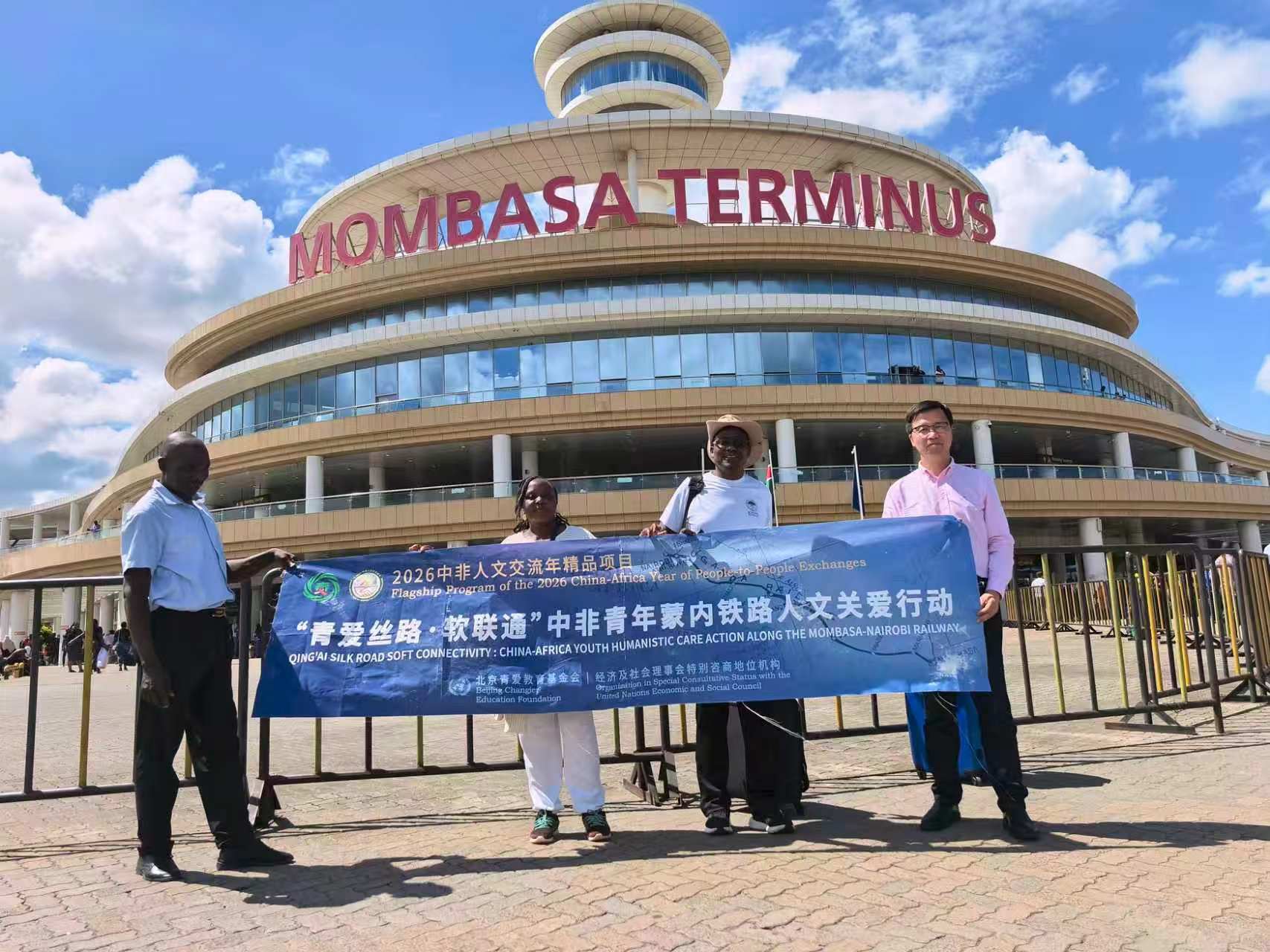
The Changier Mombasa-Nairobi Railway Survey Team in Mombasa
Mombasa is the other terminus of the Mombasa-Nairobi Railway and an important gateway city for Kenya facing the Indian Ocean. It is home to a port, beaches, fishermen, and vendors, as well as many ordinary families whose lives are shaped by and sustained through the sea.
In Mombasa, Ni Han, Africa Representative of Beijing Changier Education Foundation, accompanied by relevant experts from Jomo Kenyatta University of Agriculture and Technology, local government officials, and volunteers, visited a number of community organizations led by or with significant participation from local women, including:
·Jomo Kenyatta Public Beach Community Traders C.B.O
· Mtoni Marine Savers
· Shelly Beach Fishermen Self-Help Group
· Timbwani Beach Management Unit
Approximately 150 local women's representatives participated in the exchange activities in an organized manner.
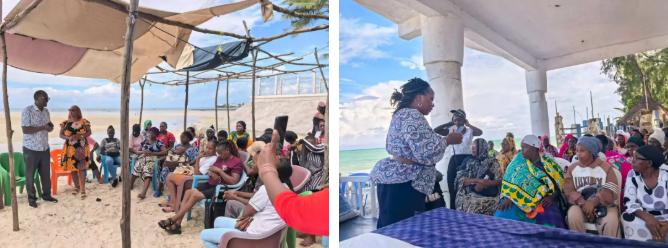 Mombasa Public Beach Exchange Event Shelly Beach Exchange Event
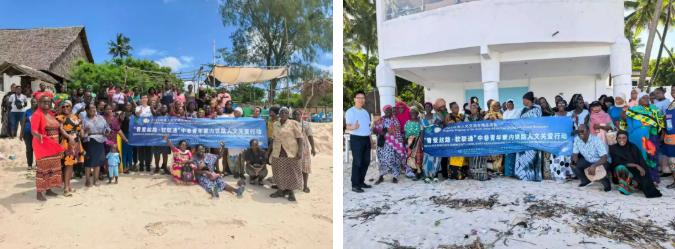
Group photo with local community representatives who participated in the exchange activities
These women came from beach vendors, fishing families, community environmental organizations, and self-help cooperative groups. These women are not passive recipients of aid. They are among the most resilient, action-oriented, and deserving of recognition in community development.
They engage in trade to sustain household incomes, participate in fishing to support coastal livelihoods, and take part in beach clean-ups and environmental protection efforts, hoping to give their children a cleaner, safer, and more hopeful community to grow up in.
Through these exchanges, the Changier team came to deeply appreciate that the local communities lack neither the desire for change nor the organizational foundation to pursue it. What truly holds them back is insufficient capacity training, weak infrastructure, limited access to technical tools, restricted market connections, and a long-standing lack of attention to their human needs.
The needs they expressed were simple and clear:
· Access to more systematic skills training;
· Better basic conditions related to coastal livelihoods;
· Support for environmentally sustainable practices;
· Improvement on household incomes through trade, fishing, handicrafts, and community services;
· Greater recognition and respect for the role women play in community development.
These voices have provided a genuine and solid foundation for the subsequent work of the "Changier Silk Road · Soft Connectivity" project in Mombasa, covering women's empowerment, family education, community health, youth care, and ecologically sustainable practices.
What Changier has done is not simply bring a project to Africa. It has listened closely to the land, looked attentively toward families, and extended a hand to those who need support the most and who hold the greatest power to transform their communities.
Women, Families and Communities: The African Expression of Changier's Public Welfare Approach
Beijing Changier Education Foundation has long been dedicated to sexual health education, HIV/AIDS prevention, family education, and youth development support, establishing mature public welfare models such as "Changier Huts" and "Maternal Love Academy".
These experiences hold immediate and pressing practical value for the coastal communities along Kenya's shores.
In many coastal communities, women serve not only as family caregivers and supplementary income earners, but also as a core force in children's education and community mutual aid networks. Supporting one mother is often supporting an entire family; supporting a group of women can breathe life into a whole community.
The "Changier Silk Road · Soft Connectivity" project therefore does not pursue large-scale construction or short-term impact. Instead, it adheres to Changier's consistent professional approach:
It leverages existing facilities, integrates local resources, delivers proven curricula, cultivates local capacity, and establishes long-term mechanisms.
Going forward, the project will focus on key nodes along the Mombasa-Nairobi Railway, advancing youth health education, family education, women's empowerment, community volunteer training, and youth exchange programs. Through these efforts, "Changier Huts" and "Maternal Love Academy" will become warm and tangible vehicles for people-to-people exchanges between China and Africa.
Railways connect cities; education connects the future. As the project enters communities, care reaches families.
This is what Changier understands as "soft connectivity": not a slogan, but something realized through a mothers' classroom session, a youth development class, a community health sharing activity, and a sustainable local volunteer mechanism.
Dialogue with AICAD: Making Capacity Building a Long-term Pillar of "Soft Connectivity"
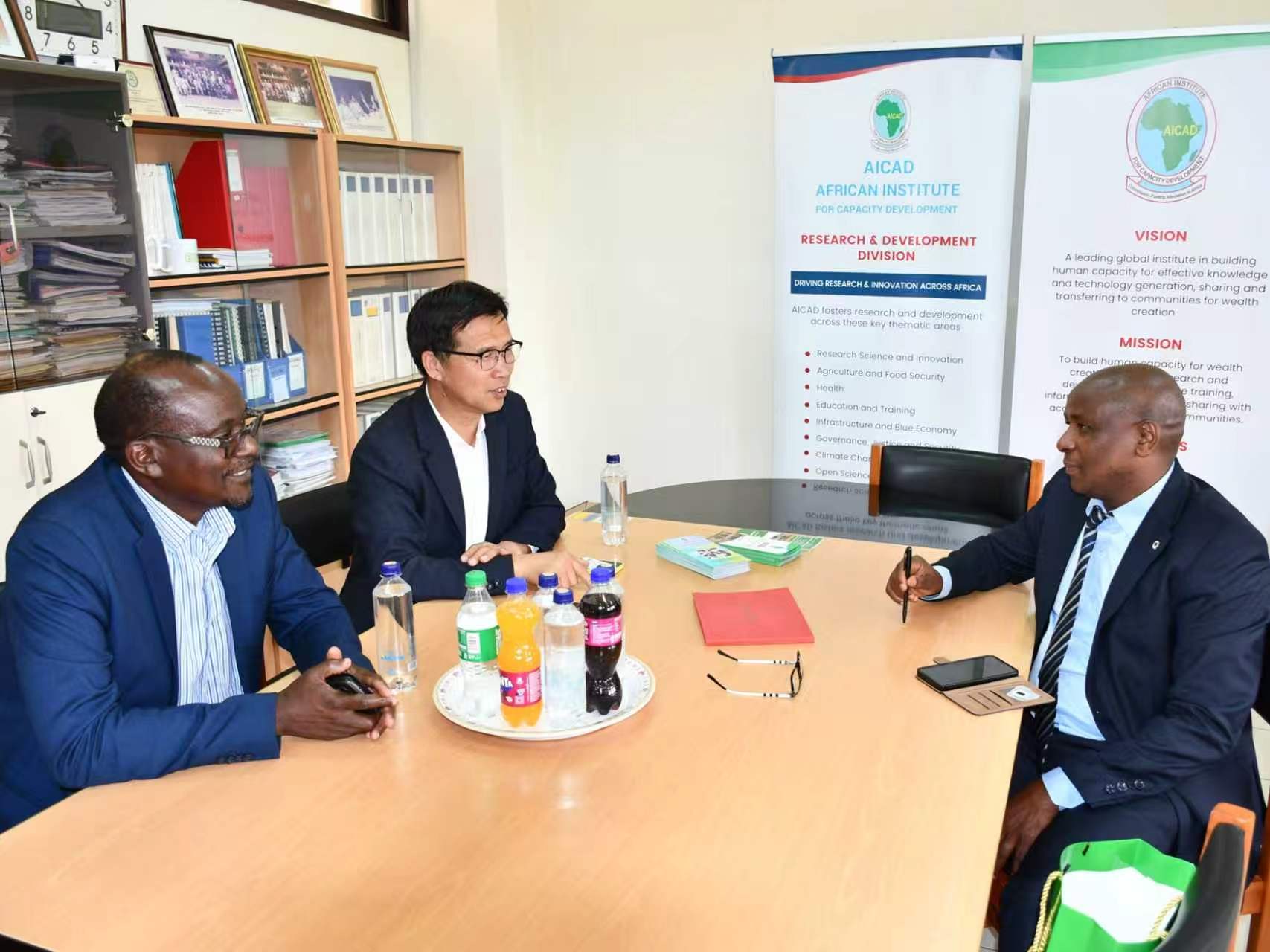
With Professor James Njiru (first from right), Director of the African Institute for Capacity Development
In advancing community exchanges and project implementation along the Mombasa-Nairobi Railway, Beijing Changier Education Foundation has continued to strengthen collaboration with local professional institutions in Africa.
During this process, Ni Han, the Africa representative of Beijing Changier Education Foundation, held an in-depth exchange with Professor James Njiru, Director of the African Institute for Capacity Development. The African Institute for Capacity Development (AICAD) is an international organization jointly supported by the governments of Kenya, Tanzania, and Uganda. Its headquarters are located at Jomo Kenyatta University of Agriculture and Technology (JKUAT) in Nairobi, Kenya, with national offices at Egerton University in Kenya, Sokoine University of Agriculture in Tanzania, and Makerere University in Uganda.
AICAD was established with the mission of advancing poverty reduction, development, and wealth creation across Africa through human capacity building. Its long-term focus on agricultural development, community empowerment, women's capacity building, youth training, and the establishment of localized development mechanisms aligns closely with the goals of the "Changier Silk Road · Soft Connectivity" project, which advocates for education empowerment, family support, women's development, and youth exchange.
During the exchange, both sides discussed topics including women's capacity building along the Mombasa-Nairobi Railway, sustainable community livelihoods, youth volunteer training, family education promotion, and mechanisms for China-Africa public welfare cooperation. In particular, regarding the advancement of women's capacity building in Africa, AICAD's local networks, research resources, and training systems are well-positioned to complement the Beijing Changier Education Foundation's extensive experience in the Maternal Love Academy, Changier Huts, health education, and family education, offering broad scope for deeper collaboration.
It is worth noting that Ni Han was recently appointed as a part-time scientist by AICAD. This appointment not only reflects the recognition of Changier-related work by local African professional institutions, but also provides a more solid professional interface for the "Changier Silk Road · Soft Connectivity" project to carry out future cross-institutional collaboration, localized curriculum development, community research, teacher training, and capacity building.
From community organizations to university platforms, from women's representatives to research institutions, Beijing Changier Education Foundation is building a multi-level, localized, and professional cooperation network to ensure that China-Africa people-to-people exchanges go beyond one-off events and gradually evolve into a sustainable capacity-building mechanism. This is precisely the deeper meaning of "soft connectivity": connecting not only roads and cities, but also knowledge, experience, methods, and people.
Visiting APBET School: Seeing Children on the Margins, and Seeing the Future
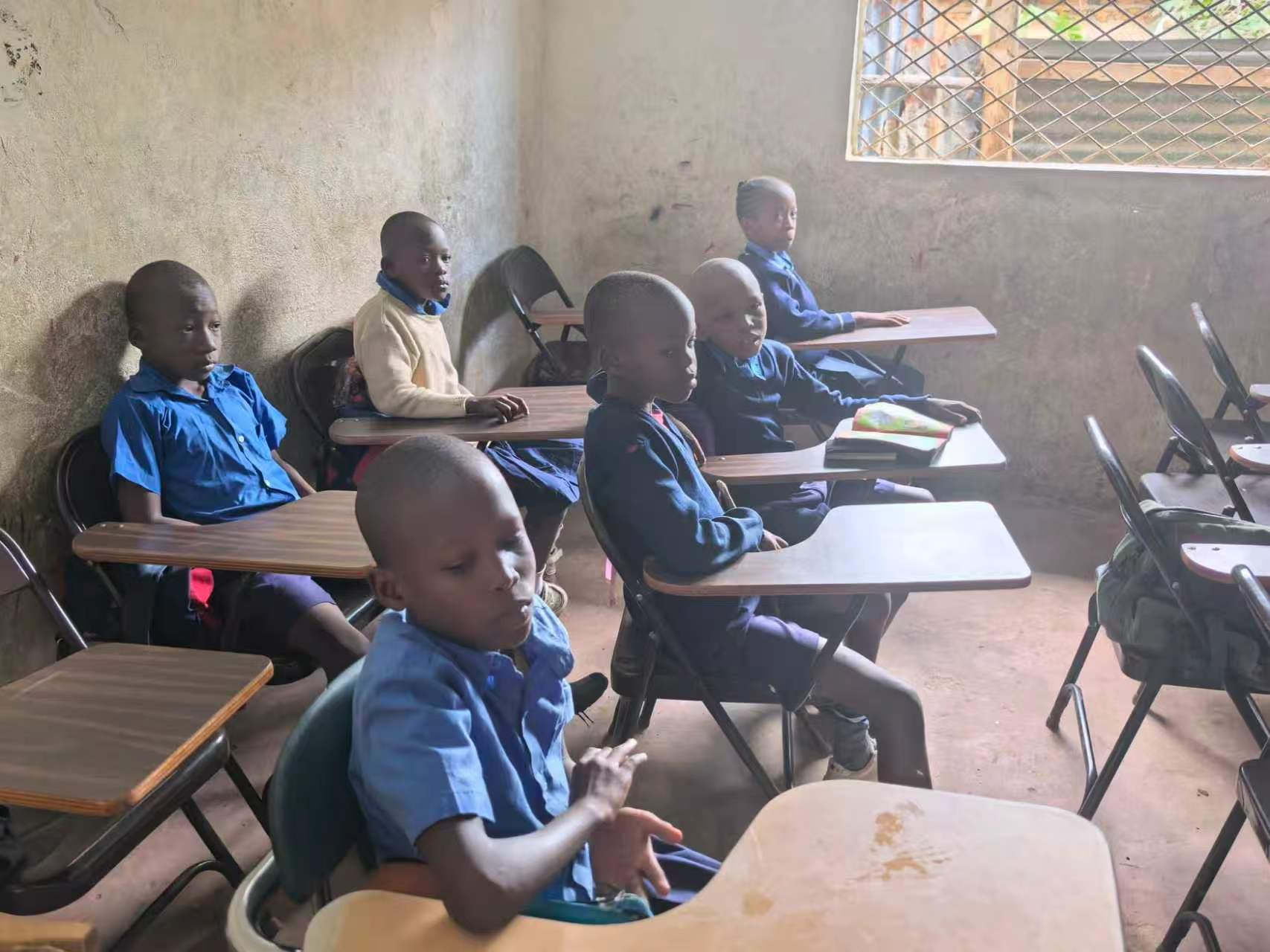 Classroom at St. Consolata Community Education
Centre
Classroom at St. Consolata Community Education
Centre
In Mombasa, the Changier team also visited an APBET school, St. Consolata Community Education Centre.
APBET stands for Alternative Provision of Basic Education and Training in Kenya. These institutions were previously known as non-formal education centers. They are primarily located in urban slums, informal settlements, and marginalized areas including arid and semi-arid regions, serving children who have been excluded from the formal education system or are unable to attend formal schools on a consistent basis.
In response to the educational needs of children living in poverty and on the margins, the Kenyan government, through the Ministry of Education, formulated the Alternative Provision of Basic Education and Training Policy in 2009. This was followed in January 2016 by the issuance of registration guidelines for APBET institutions, aimed at promoting the gradual standardization and development of such schools. Today, APBET schools are numerous across Kenya, with thousands of institutions reportedly serving millions of children living in poverty and on the margins.
Yet the practical challenges remain severe. Many APBET schools have long struggled with poor operating conditions, insufficient formal funding, limited learning materials, low teacher salaries, inadequate teaching staff, and weak infrastructure. Some have yet to complete formal registration. These factors affect, to varying degrees, the overall quality of education for young people in Kenya, and place greater pressure on children in terms of academic support, psychosocial support, and developmental guidance.
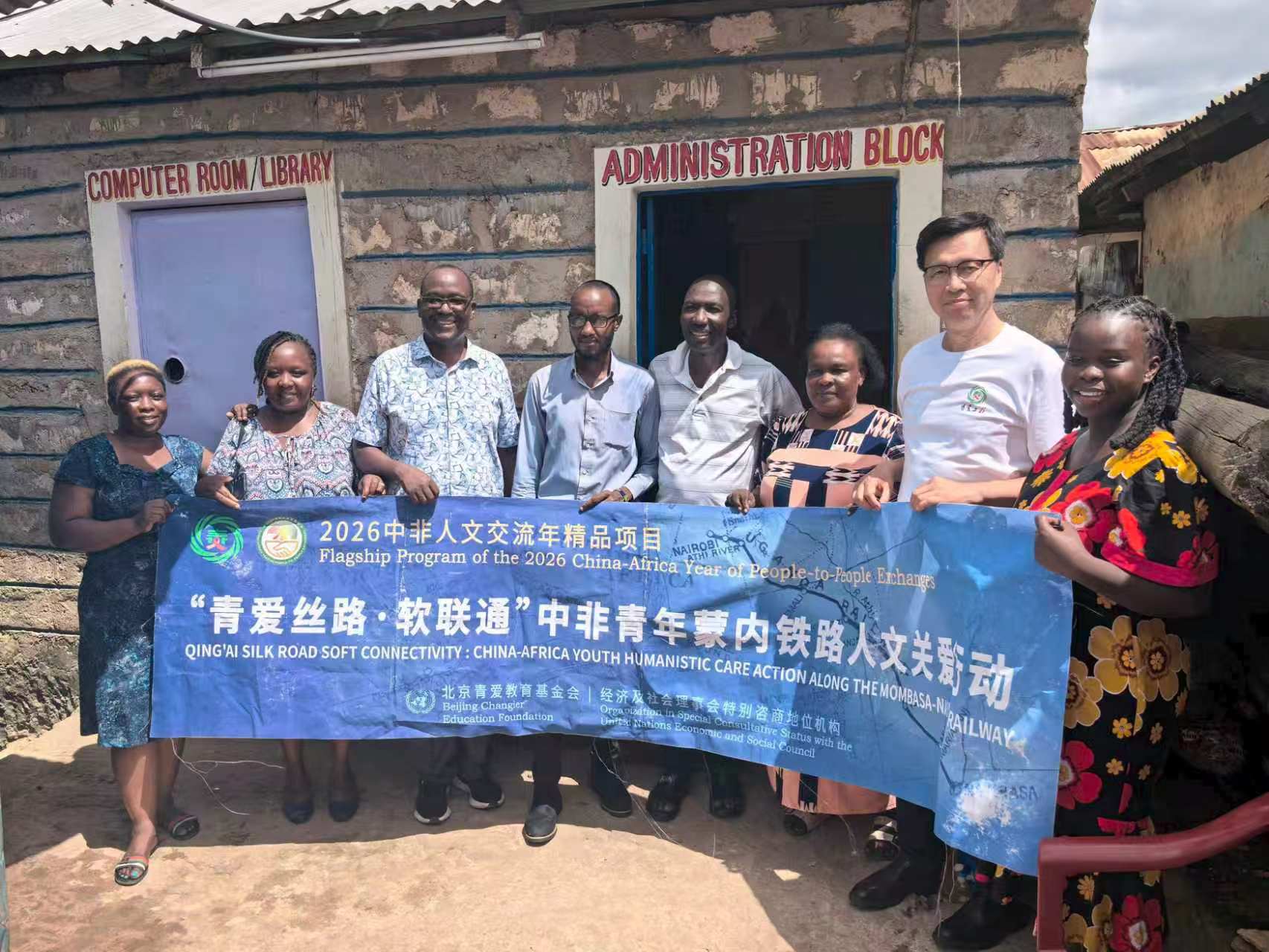
Group photo with the principal and teacher representatives of St. Consolata Community Education Centre
St. Consolata Community Education Centre, visited by the Changier team, is a formally registered APBET school located in a slum in Mombasa. The school occupies approximately 100 square meters of space. Despite its modest conditions, it provides basic education for children from Grade 1 through Grade 6. Each class has around 10 students, most of whom come from impoverished families in the surrounding area. The school's principal is a mother who has long supported its operations out of dedication and compassion. She and her fellow teachers persist in teaching under limited conditions, doing their best to keep open a door to the future for these children.
During on-site exchanges, the Changier team learned that the school's current challenges center primarily on insufficient learning materials, weak infrastructure, particularly an inadequate supply of drinking water, a shortage of teaching staff, and growing student needs for academic support and psychosocial assistance. Modest classrooms, limited books and teaching materials, teachers who persist on low salaries, and children eager to learn together form a vivid and moving portrait of this school.
This experience gave Beijing Changier Education Foundation a clearer sense of where it could contribute: not to take over the running of a school, but to fill a gap where children most need companionship, teachers most need support, and families most need guidance, by bringing in a ray of light, a set of curricula, and a sustained presence alongside them.
From "Hard Connectivity" to "Soft Connectivity": Changier's Role Is to Bring Warmth to the Field
The Mombasa-Nairobi Standard Gauge Railway has already achieved connectivity in a spatial sense. It has redefined the distance between Mombasa and Nairobi, and provided a more efficient corridor for regional cooperation in East Africa.
What Beijing Changier Education Foundation is doing is laying another set of tracks above this railway line, tracks that are invisible yet equally vital: tracks of people-to-people exchange, of youth walking side by side, of women's empowerment, of children's growth, and of community building.
These tracks carry no steel rails, yet they carry trust. They have no stations, yet they host countless genuine encounters. They have no roaring trains, yet they have hearts that have been lit up, one by one.
From the Eldoret City Marathon to the coastal communities of Mombasa, from the running tracks where Kenyan youth compete to the meeting halls where women's representatives speak with passion, from infrastructure cooperation to community public welfare services, the "Changier Silk Road: Soft Connectivity" project is revealing an increasingly clear operational logic:
· Using the Mombasa-Nairobi Railway as the main axis, connecting key cities and communities along the route;
· With youth as the primary focus, promoting mutual learning and exchange between the new generations of China and Africa;
· Using education and health as entry points to address the genuine needs of communities;
· With women, mothers, and children as the primary focus, promoting the joint development of families and communities;
· Using culture, tourism, environmental protection, and sustainable livelihoods as extensions, exploring pathways for integrating public welfare with development;
· With long-term mechanisms as the goal, developing a replicable and scalable model for China-Africa people-to-people exchanges.
This is not a brief visit, but a sustained effort through which a carefully crafted project moves from concept to the field, from plans to people, and from exchange to co-creation.
Bringing China-Africa Friendship into the Lives of Ordinary People
What makes the "Changier Silk Road: Soft Connectivity" project truly valuable is its choice to start with people.
It does not reduce China-Africa cooperation to grand narratives, nor does it limit public welfare action to simple donations. Instead, it ventures into specific, everyday scenes: a mother's confusion, a child's classroom, the growth of a young volunteer, a group of coastal women striving to improve their livelihoods, and a community's hope for a greener future.
Genuine and lasting friendship is rarely proclaimed. It grows through shared journeys, through listening, and through solving problems together, one encounter at a time.
Changier believes that understanding between young people can transcend language, that the bonds between mothers can transcend borders, that children's longing for the future can transcend race, and that the goodwill carried by public welfare can transcend mountains and seas.
Mombasa-Nairobi Railway connects Kenya's ports, cities, grasslands, and highlands, while the "Changier Silk Road · Soft Connectivity" project aspires to connect the people, families, schools, and communities along the way.
From Zheng He's voyages to the Mombasa-Nairobi Railway, from the Maritime Silk Road to the Belt and Road, history has laid a deep foundation for China-Africa friendship. Today, Changier is committed to adding a warmer, more tangible, and more vibrant chapter to this friendship through professionalism, sincerity, and a long-term vision.
The Journey Continues
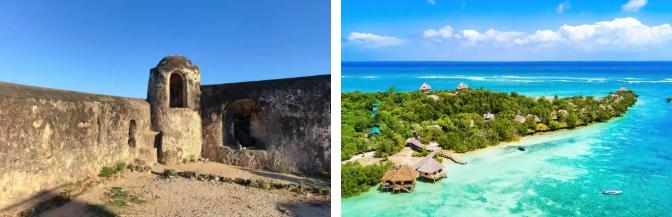 Fort Jesus, Mombasa Mombasa Beach
Mombasa is Kenya's second-largest city and a major port in East Africa. With a long history and a rich blend of cultures, it serves as both a vital port hub and a premier coastal tourism destination.
Along the Mombasa-Nairobi Railway, Beijing Changier Education Foundation will continue to advance a series of initiatives, including youth exchange, Changier Huts, Maternal Love Academy, traditional Chinese medicine outreach, green cultural tourism, intangible cultural heritage preservation, and community empowerment. These efforts aim to bring the signature programs of the "China-Africa Year of People-to-People Exchange" into the lives of real people, into everyday life, and into the future.
The significance of a railway lies not only in carrying people to distant places. More importantly, it creates opportunities for people to understand one another, support one another, and draw closer to one another.
This is precisely what Changier is doing.
Walking the path with purpose, and bringing hearts closer together. To let "soft connectivity" and "heart-to-heart connectivity" take root and flourish upon the foundation of "hard connectivity", growing stronger, warmer, and more enduring.
Despite being the largest city on Bali, Denpasar has underdeveloped transportation infrastructure. The roads are narrow ...
Apr 07, 2025 Read Details
On March 8, the second stop of " Telling Stories of Mothers" was launched in Tonglu. Zhang Yinjun, Chairman of the Beiji...
Mar 10, 2024 Read Details
Editor's Note: The 1990 United Nations World Summit of Heads of Government pointed out regarding women and children issu...
Oct 24, 2025 Read Details


We reserve the right to correct and updateany content on this website without notice.
Introduction Articles of Association Organization Structure Milestones Rewards and Certificates Image Ambassadors Endowment Enterprises
Key Events Project News Media Report Announcement Partners Recent News

